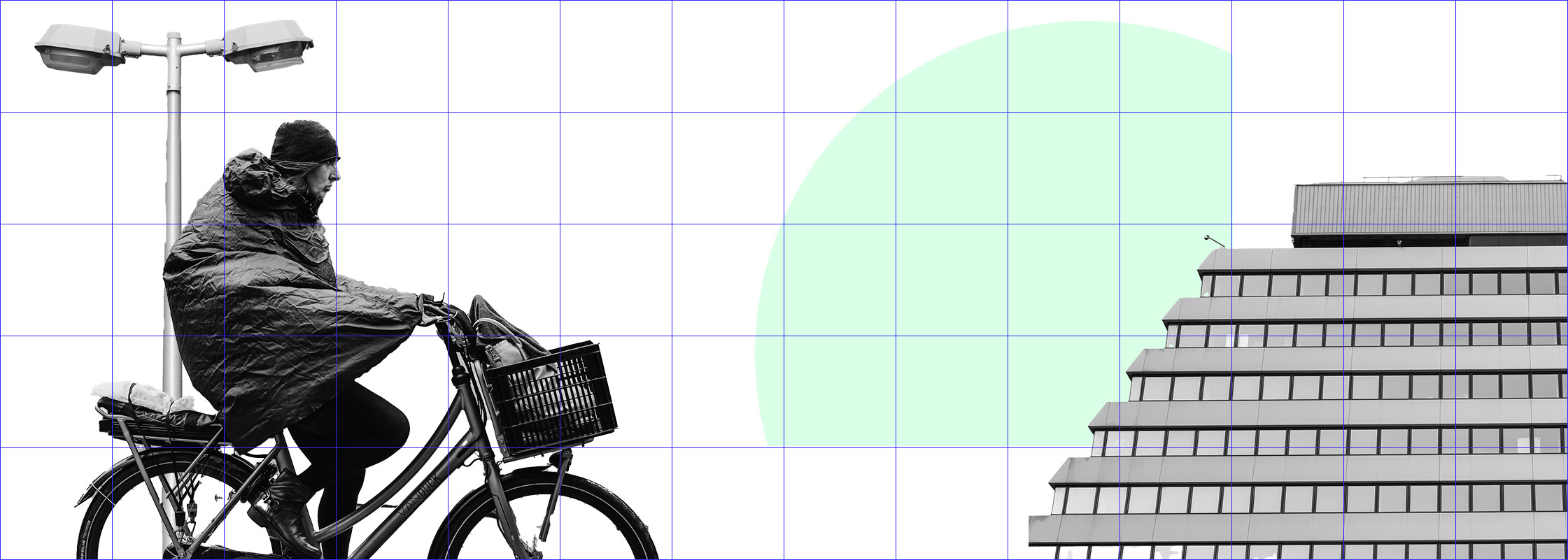
Stadtluft will use the examples of Berlin, Graz and Winterthur to
examine the role of bikes in the city. Why does a city's biking
infrastructure look the way it does? What are the historical,
economic, cultural and social aspects? What is the philosophy behind
cycling in the city? Who defines the aesthetics of cycle paths in
particular and the public space in general?
How are decisions made about the materials and surfaces of cycle
paths? In short, what lies behind what is visible? And does cycling
shape a city?
For several years now, and even more so since the pandemic, cycling
has been booming in European cities. But the role of cyclists varies
greatly from city to city.
There are cities such as Amsterdam or Copenhagen which are
well-known for being bike-friendly and which cyclists have enjoyed
riding around for decades, In such places, the public space is
organised in such a way that cyclists are able to reach their
destination both safely and quickly. Bicycles shape the cityscape,
and the road layouts for motorised traffic are designed to ensure
that cars have to move slowly in their prescribed lanes. The
opposite is true in Berlin, where cycling remains a hazardous
activity, even in the 21st century. Bikes queuing up at critical
points may well have become a familiar sight, but this has more to
do with the fact that the cycle paths are narrow and blocked and
often end unexpectedly. Despite all the political declarations of
intent by a red-green government, Berlin’s sprawling streets and
crossings still belong to its cars. In Graz, an Austrian town in the
mountains, cycle paths have been popping up all over the place, at
least in the historical centre, and the number of cyclists has risen
continuously. Winterthur, on the other hand, has long been
considered one of the leading cycling cities in Switzerland. Some
say the city has rested on its cycling laurels for too long. Perhaps
this is why the city has recently launched various initiatives
again.
The past, present and future of cycling in Berlin, Graz and
Winterthur will be systematically analysed. Senior politicians,
local officials and lobby groups in the three cities will exchange
views. The exchange will be enriched by input from artists,
scientists and members of the public. By invitation only.
The Winterthur team presents the situation of three selected
examples and goes into the history and current situation of the
locality, presents the the current situation of the location,
presents the problem and develops the chosen or envisioned solutions
according to the "Winterthur School". Then the colleagues from
Berlin and Graz colleagues have their turn and analyse the situation
in Winterthur from their point of view and present ad hoc present
ad-hoc "Berlin" and "Graz" solutions.
Programme
(PDF).
Introductory Speech by Simon Kuper, Columnist Financial Times, Paris
Panel debate at the BauForum with decision-makers from the worlds of
politics, city governments and lobby groups from Berlin, Graz and
Winterthur.
Registration (PDF).
Preliminary interview with panel guest Alex Capus in the Landbote
newspaper of 5 May 2022
(PDF).
Overview of the perimeters to be dealt with on the topics of
reallocation of space, intuitive traffic routing and safety
(PDF).